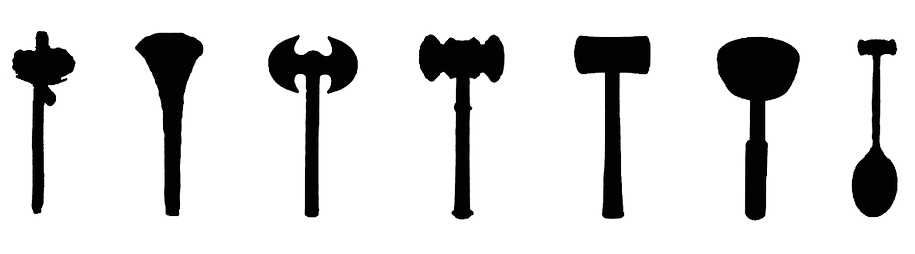
The chairman’s gavel descends from the sharp double-bladed axe that was a formidable weapon in the early medieval societies of north-western Europe. In the central assemblies of these societies, warriors decided on attack and defence, the division of spoils, guilt and penalties.
A precious, decorated battle-axe was part of the leader’s standard equipment. It had a ritual function and was a symbol of power. In the administration of justice it was used, among other things, to carry out sentences, and to punish participants who broke the rules of the council.
Anyone who spoke without the leader’s permission risked losing a piece of his cloak. For more serious offences, such as open violence against fellow members, the ritual axe was used to cut off part of a finger, or the head.
Over the centuries the leader’s ritual axe turned into the blunt hammer of judges, chairmen and auctioneers. The evolution from sharp battle-axe to polished gavel, used only to strike the table, reflects the ‘civilising of meetings’. This process, in which participants compel each other to ever more stable and subtle forms of self-restraint, is still going on. And so is the development of the chairman’s gavel.
The spoon
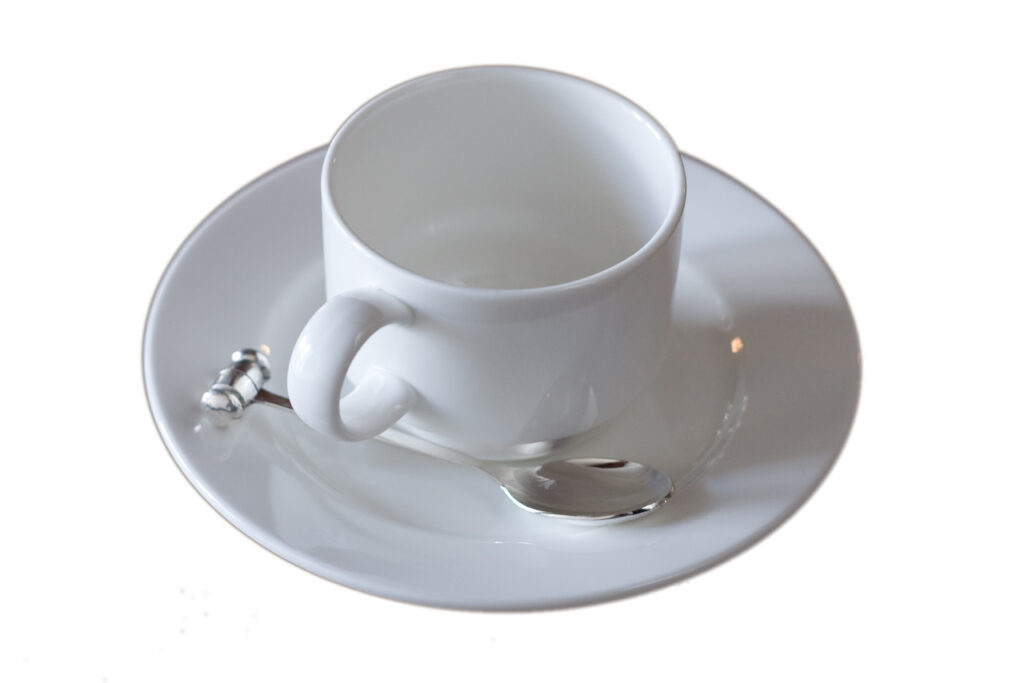
In meetings at work, a large wooden gavel is often out of place or impractical. So Vergaderkundig Bureau Van Vree developed a version suited to our times: handy, quick and elegant. A heavily silver-plated coffee spoon in the shape of a chairman’s gavel, 10.5 cm long.